Office Wear for Women in Pakistan: Building a Work Capsule

By Sameel Hayat
Co-founder, Markaz ·

A work capsule is a small set of office clothes that all go together, so most mornings have an answer without a decision. Seven or eight pieces is usually enough: two or three tops that work plain, two bottoms in neutral colours, one layer for air conditioning and winter, one pair of shoes you can walk in, and a bag that holds a laptop. Everything shares a colour family, so any top goes with any bottom.
Office clothes fail differently from occasion clothes. They get worn weekly for two years, washed constantly, sat in for eight hours and seen by the same people. Fabric that creases by 11am, a colour that shows sweat, or a shoe that hurts on the third wearing costs more than whatever was on the label.
This guide covers the pieces, the fabrics that survive a Pakistani summer, keeping the palette working, and ordering online without sizing mistakes.
How many pieces you actually need
The arithmetic is the whole argument for a capsule. Three tops and two bottoms that all match give you six outfits. Add a third bottom and it is nine. Add a layer that works over all of them and you have effectively doubled the wardrobe again for winter and for over-cold meeting rooms.
Compare that with the usual pattern — twelve tops bought one at a time, each in a different colour, half of which go with nothing. More clothes, fewer outfits. The constraint that makes a capsule work is not spending less; it is buying inside one palette so the pieces are interchangeable.
A realistic starting count for a five-day office week:
- 3 tops — kurtas, shirts or a mix, all plain or near-plain.
- 2–3 bottoms — straight trousers, cigarette pants or a shalwar, in neutrals.
- 1 layer — a long waistcoat, an unstructured blazer or a cardigan.
- 2 dupattas or stoles — one plain, one with some pattern, both matching everything.
- 1 pair of everyday shoes plus one smarter pair for client days.
- 1 bag that takes a laptop, a water bottle and lunch.
That is enough to go two weeks without repeating a visible combination. Anything beyond it is preference, not need.
Fabric: what survives a Pakistani office week
Fabric decides more about how office clothes look on a Thursday than cut or colour does. The test is not how the piece feels in your hand, it is what it does after eight hours of sitting and a wash cycle.
Summer, roughly April to September
Lawn is the default for good reason: fine cotton, breathable, and cheap enough to own several. It creases, so look for a slightly heavier lawn rather than the thinnest printed variety if you sit a lot.
Cotton and cambric hold a shape better than lawn and take the heat nearly as well. Cambric in particular looks more formal in photographs and on video calls.
Linen and linen blends breathe beautifully and crease enthusiastically. A linen-cotton blend is the compromise: most of the airflow, much less of the crumple.
Viscose and rayon drape well, but they hold heat and show sweat more than cotton — fine for an air-conditioned office, difficult on a rickshaw commute.
What to be careful with in summer: anything described only as "silky", polyester crepe, and dark synthetics. They photograph well and wear badly at 40 degrees.
Winter and cold meeting rooms
Khaddar is the workhorse — thicker cotton weave, warm without bulk, and it presses flat. Cotton-wool blends and light flannel work for the coldest weeks in Lahore and Islamabad.
The more useful winter purchase is usually not a warmer shirt but one good layer. A long waistcoat or an unstructured blazer over the same summer kurtas extends the whole capsule instead of adding to it.
The crease test before you buy
Take a handful of the fabric, squeeze it hard for about ten seconds, and let go. If the creases stay sharp, they will stay sharp on you after a car ride. Pure linen and thin lawn will always crease some; the question is whether it falls out as you walk or sets like a fold.
Colour: why the palette does the work
Neutrals are not a style preference here, they are what makes six outfits out of five pieces. Pick two neutrals for bottoms and layers — black, charcoal, navy, beige, stone or white — and stay with them.
Then allow yourself colour in the tops and dupattas, but inside one family. Dusty pinks and maroons sit together; teals, olives and mustards sit together. Mixing a cool family and a warm family is what leaves you with tops that match nothing.
Three practical notes specific to working here:
- Pale grey and pale blue show sweat more than any other colours. If your commute is not air-conditioned, keep them for indoor days.
- White needs a second layer or a lining, and it needs replacing on a schedule. Treat white shirts as consumables.
- Full black in June is a real comfort penalty outdoors, whatever the fabric.
Stitched or unstitched?
Both routes work and they fail in different places.
Unstitched gives you fit. If you are between standard sizes, or tall, or you want a specific trouser width, a tailor solves in one visit what no ready-made size chart can. Most unstitched suits come as a three-piece — shirt piece, trouser piece, dupatta — so one purchase is a whole outfit. The costs are time and the tailor queue, which gets long before Eid and before wedding season.
Stitched and ready-to-wear gives you certainty and speed. You see the actual garment, and there is nothing to go wrong between buying and wearing. The risk is fit, which is why measurements matter more than the size letter.
A practical split most working women land on: unstitched for trousers and anything you will wear weekly for two years, ready-made for tops where a small fit variation does not matter. Our guide on where to buy ladies' fashion online in Pakistan walks through the six channels for both, and what each is good at.
Dupattas, stoles and covering at work
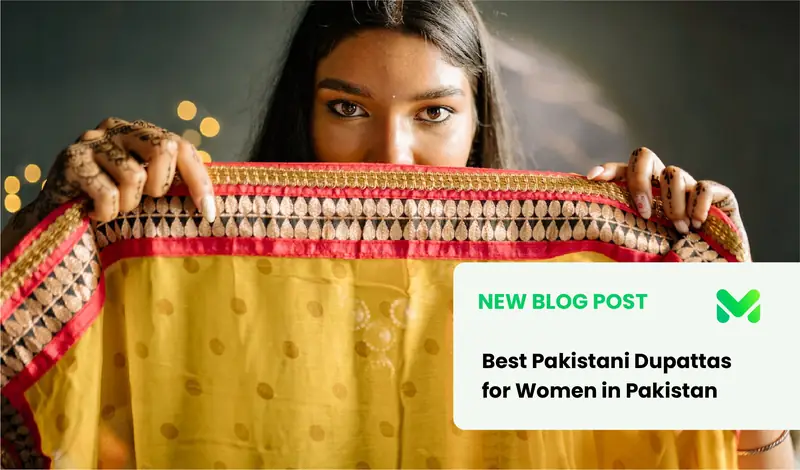
The dupatta is the cheapest way to make a plain capsule look deliberate rather than repetitive. Two are enough if you choose them to match everything: one plain in a neutral, one patterned that picks up your top colours.
For an office specifically, weight matters more than decoration. A heavy embroidered dupatta slides off a shoulder all day and has to be managed. Cotton, voile, light chiffon and crinkle stay where you put them and press easily. Keep the zari, tissue and net pieces for events. If you want to understand what each type actually does, our guide to the best Pakistani dupattas goes through the fabrics one by one.
If you wear an abaya to work, the same logic applies to it: a lightweight crepe or nida in a neutral will get worn far more than a heavily worked one, and it means the clothes underneath can be simpler still.
Shoes and bag: the two things used every single day
These are the pieces where buying once and well pays back fastest, because they are in use five days a week regardless of what else you wear.
For shoes, the honest brief is a closed or half-closed flat or low block heel that you can walk a car park in. Pointed flats, loafers and block heels all read as formal. Stilettos and thin heels are a commuting problem on Pakistani pavements and in wet weather. Buy one pair in a neutral that goes with both of your bottom colours, and a second smarter pair only if your job has client days.
For the bag, measure your laptop before you order anything: a 15-inch laptop does not fit a bag advertised as "large" unless the listing gives dimensions in centimetres. A structured tote with a flat base stands up on a desk; a soft hobo bag is comfortable and swallows everything.
Ordering office clothes online without sizing mistakes
Sizing is where most online clothing orders go wrong, and the fix is boring: stop reading size letters and start reading centimetres.
- Measure a garment you already own and like, flat on a bed, rather than measuring your body. Chest across, waist across, shoulder seam to shoulder seam, sleeve length, full length. Write the five numbers down once and keep them on your phone.
- Compare those numbers to the listing's chart, not to the size name. A "medium" varies by several centimetres between sellers, and between local and China-direct stock in particular.
- For trousers, waist and inseam both matter. A trouser that fits at the waist and is four centimetres short reads as a mistake, not a style.
- Read what the fabric is, and if the listing will not say, treat it as polyester and decide accordingly.
- Look for buyer photos. A worn photo tells you about drape and true colour in a way a studio shot on a mannequin cannot.
- Ask before ordering. A seller who will not send measurements is telling you something useful.
Cash on delivery is what makes this low-risk in practice. On local Markaz orders you pay at the door, so you can open the parcel, check the stitching and the shade against what you already own, and decide before the money changes hands. That is a real advantage for clothes over prepaid-only imports, where a wrong shade becomes a returns problem weeks later.
Where to buy office wear in Pakistan
There are two sensible routes and the difference is time.
Local sellers are for when you need it this week, or when you want to see the piece before paying. Local orders on Markaz reach most of Pakistan in about 3–5 days with cash on delivery. Browse the Markaz product categories for what is available locally, or the deals page if you are building several pieces at once rather than replacing one.
China-direct is where the range of formal trousers, blazers, plain shirts and work bags is widest, and the price is lower because there is no importer markup in between. Delivery on Markaz China runs about 10–17 days, so it suits the planned half of a capsule — the trousers and the layer — and not the shirt you need for Monday. The China category listings are where the selection sits.
A sensible way to sequence it: order the two bottoms and the layer China-direct, since those are the pieces you will wear longest and are least urgent, and buy the tops locally where you can check the shade in person. The same local-versus-China trade-off shows up in every category, and our guide to online shopping in Pakistan works through it category by category.
If you are choosing between local fashion marketplaces specifically, our Laam vs Markaz comparison sets out where each one fits.
A capsule you can build in three orders
Buying all eight pieces at once usually means a palette decided in an afternoon. Three orders spread over a few weeks works better, and each one is useful on its own.
Order one — the bottoms and the shoes. Two pairs of trousers in your two neutrals, and the everyday shoes. This is the foundation; nothing else can be chosen until the bottom colours are fixed. Do this one where you can check fit and comfort on arrival.
Order two — the tops and the dupattas. Three plain or near-plain tops inside one colour family, plus the two dupattas. Now you have your first six to nine outfits.
Order three — the layer and the bag. One waistcoat or blazer that goes over all three tops, and a bag sized to your actual laptop. This is the order worth planning ahead for, so it is the natural one to place China-direct.
Sequenced this way, each order is chosen against pieces already in front of you rather than against a plan on paper.
Care: keeping work clothes looking like work clothes
Office clothes die from washing far more often than from wear, and the fixes are small.
- Wash dark cottons and khaddar inside out, cold. Most of the visible fading is surface abrasion in the machine, not the dye giving up.
- Dry in shade, not sun. Direct Pakistani sun on a dark kurta does in one afternoon what a year of washing would.
- Hang trousers from the waistband, not folded over a rail. The crease line across the knee is what makes a good trouser look tired.
- Press lawn slightly damp. It takes a fraction of the time and leaves no shine.
- Rotate shoes. Two pairs alternating last considerably longer than one pair worn daily, because the lining gets a day to dry.
Building an occasion wardrobe alongside it
A work capsule deliberately does not cover weddings, Eid or family events, and keeping the two budgets separate is what stops the office wardrobe filling up with pieces worn twice a year. For the occasion side, our Pakistani wedding shopping checklist covers what to buy when, and how far ahead the tailor needs it.
If you want to sell office wear rather than buy it
Women's workwear is a steady reseller category precisely because of the arithmetic above: buyers come back for the same neutrals in the same fit, rather than buying one statement piece and disappearing. The hard parts are the size spread and colour accuracy on screen.
You can order with no minimum order quantity on Markaz, which is the low-cost way to find out which sizes and which two neutrals actually move in your own area before you commit to depth in anything. The Markaz reseller programme is the place to start if you want to build it into a business rather than place a one-off order.
Frequently asked questions
Is lawn formal enough for an office? Yes, and it is what most women here actually wear through summer. Keep it plain or small-printed rather than boldly patterned, and choose a slightly heavier lawn if you sit for long stretches, because the thinnest printed lawn creases fastest.
Kurta or shirt for office wear? Both are standard. Kurtas are cooler and more forgiving of fit; shirts read slightly more formal on video calls and under a blazer. The practical answer is to own both in the same colour family so they share your bottoms.
What should I buy first if I am starting from nothing? Trousers in two neutrals and one pair of comfortable closed shoes. The bottom colours fix everything you can buy afterwards, and the shoes are worn every day regardless.
Can I order office wear with cash on delivery? Yes — local orders on Markaz are cash on delivery, which matters for clothes because shade and stitching are the two things a photo cannot be trusted on. Open the parcel, check it against something you own, then pay.
How do I stop online sizing going wrong? Measure a garment you already like while it is flat, note chest, waist, shoulder, sleeve and full length in centimetres, and buy against the listing's measurement chart rather than the size letter. Size names are not consistent between sellers.
Is it cheaper to buy unstitched and get it tailored? It is usually the better value for trousers and for anything worn weekly, because fit is what makes a cheap fabric look considered. Add the tailor's time and the queue before Eid into your planning, though — that is the real cost, not the stitching.